
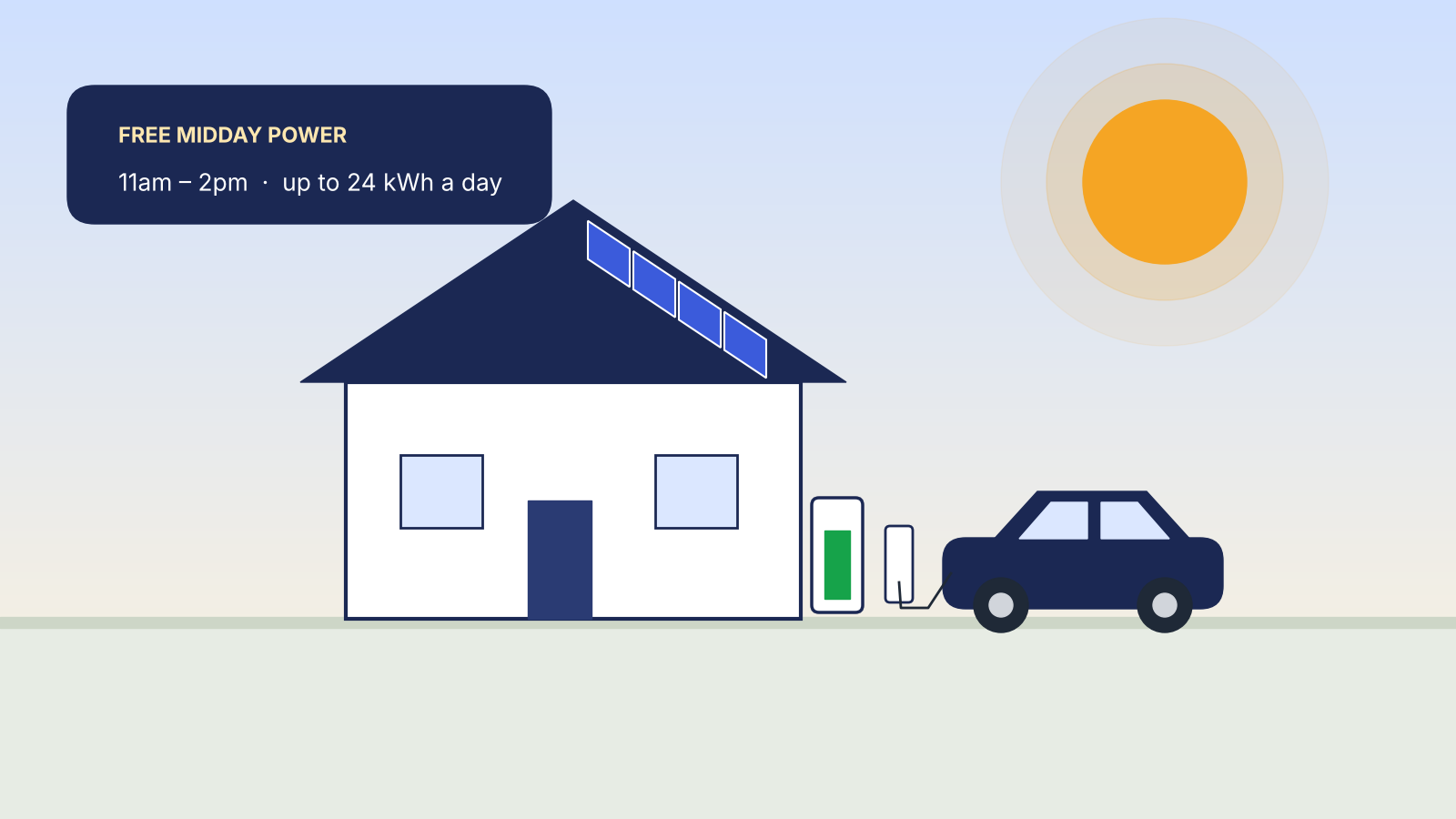
This summer, a lot of Australian homes have more energy gear than they have ever had. A bigger solar array. A battery bought under the federal rebate. An EV in the driveway. A hot water system, a pool pump and a split system or two.
At the same time, the rules around that gear have shifted faster in the last six months than in the previous five years. In parts of the country, grid power is now free for three hours in the middle of the day. That is a genuine opportunity, but only if the house can actually use it.
Most can't. Each device still runs on its own app, its own timer and its own idea of what "cheap" means. Here is what has changed, and how to turn it into real savings before the long hot days arrive.
What has changed this year
1. Three hours of free power, every day
The Solar Sharer Offer started on 1 July 2026. Retailers with more than 1,000 customers in Default Market Offer regions must offer it to households with a smart meter. You get up to 24 kWh of free electricity in a daily midday window, and you don't need rooftop solar to qualify.
| Region | Free window |
|---|---|
| NSW and South East Queensland | 11am to 2pm |
| South Australia | 12pm to 3pm |
| Victoria (Midday Power Saver) | 11am to 2pm, from 1 October 2026 |
The catch: prices outside the free window can be higher than on a standard solar plan. The AER requires retailers to warn customers that the offer may not suit everyone. It pays off when you can move real load into those three hours, and it costs you when you can't.
2. The battery rebate steps down on 1 January
The Cheaper Home Batteries Program passed 500,000 installations in August, just over a year after launch. Since 1 May, the discount steps down every six months instead of annually, and it tapers for capacity above 14 kWh. The STC factor sits at 6.8 until 31 December, then drops to 5.7 on 1 January 2027. If a battery is on your list, get quotes now.
3. Record rooftop solar
2026 is on track to be a record year for rooftop solar installations, with around 4 million homes and small businesses now generating their own power (pv magazine Australia). More solar means cheaper middays and more pressure on the evening peak. Windows like the Solar Sharer are a direct result.
4. Devices are being asked to work together
From 1 November 2026, AEMO's Flexible Trading Arrangements let a battery, EV charger or solar system be metered and settled separately from the rest of the site. For now that is aimed at larger customers. Meanwhile, energy ministers have endorsed 18 initial device requirements so inverters, batteries and EVs can talk to each other regardless of brand or retailer.
The direction is clear. Homes are expected to act less like a collection of gadgets and more like a small, coordinated power station.
The problem: three hours, 24 kWh, five devices that don't talk
Free power only saves money if it lands in the right place. Picture a typical Solar Sharer household on a hot January day:
- An EV that can pull 7 kW. Left alone for three hours, it will take 21 kWh, nearly the whole allowance.
- A home battery that should be full before the 4pm peak.
- A hot water system on an old timer, still set to the overnight off-peak hours.
- A split system that could pre-cool the house while power is free.
- A pool pump that runs whenever it was last told to.
Run them all at once and you blow through the 24 kWh cap by noon. Anything above it is charged at the plan's off-peak rate. Run them on separate timers and something always misses out. Usually it is the battery, which then can't cover the evening peak.
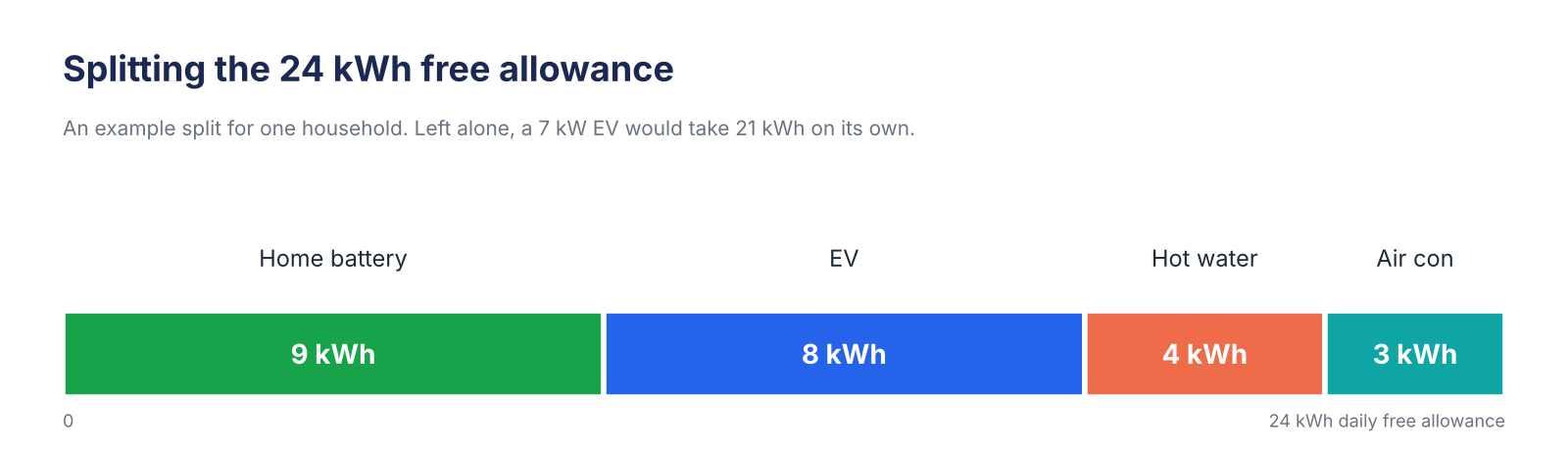
Your numbers will differ. The point is that the split needs a plan, and the plan has to change with the weather.
How Gridkeeper fills the window
Gridkeeper sits above the gear you already own. It connects to each vendor's cloud or open protocol, then runs the whole site from one plan. You set the rules once. It handles the switching.
Policies that know the time, the price and the weather
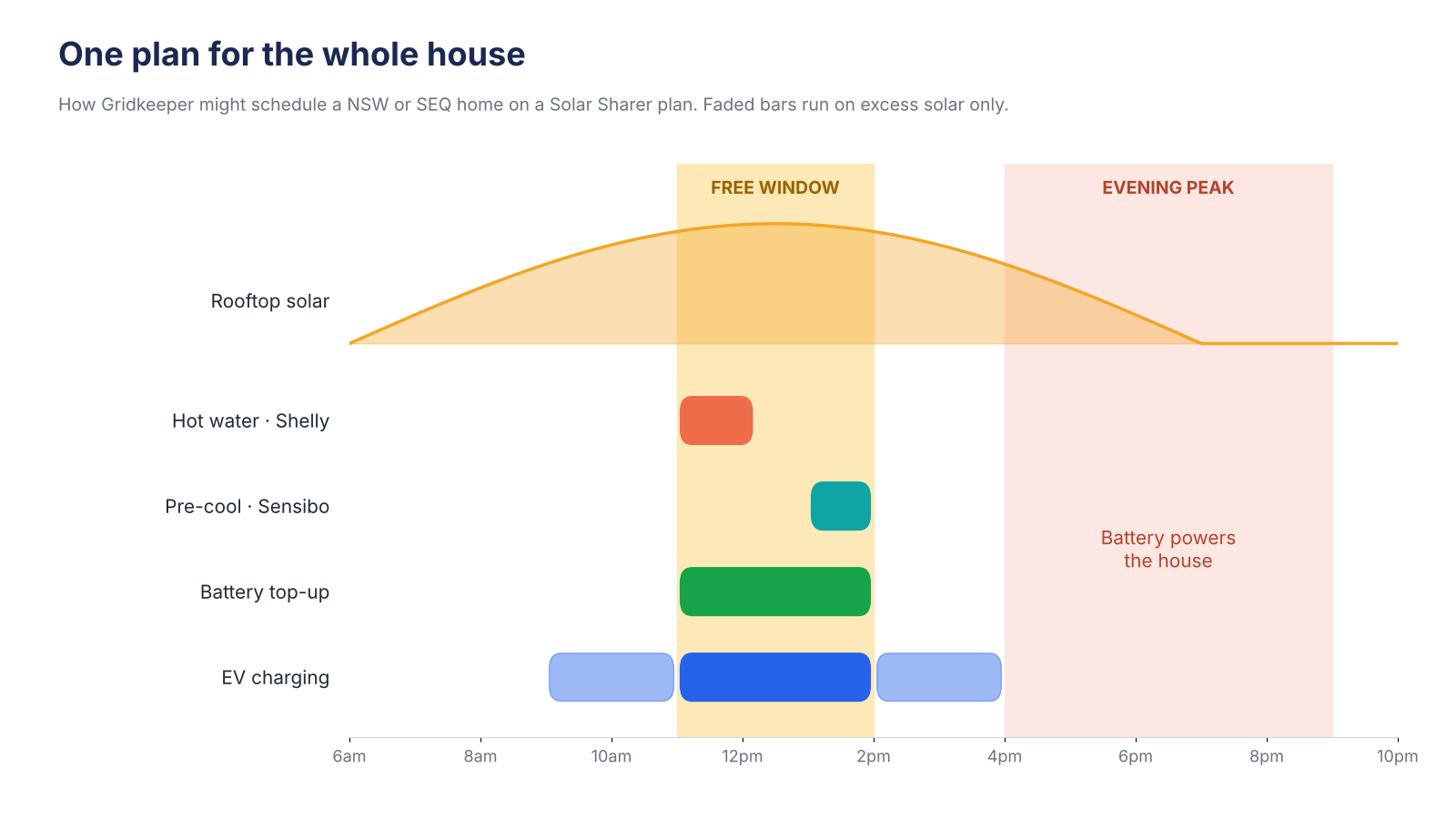
In Advanced Mode, each policy combines a time window, a price, the battery's state of charge and tomorrow's solar forecast. A Solar Sharer setup in NSW or South East Queensland might look like this:
- Hot water on, 11:00 to 14:00. A Tuya or Shelly switch heats the tank inside the free window, then switches off before the peak.
- Charge the battery from the grid when the forecast is poor. If Solcast says today's solar won't cover the house and the battery is under 90%, Gridkeeper tops it up from free grid power. On a sunny day it leaves the job to your panels.
- Pre-cool before the peak. A Sensibo-connected split system drops the house a few degrees before 2pm, so it coasts through the evening.
- Protect a reserve. An emergency floor keeps the battery above a set level for storms and outages.
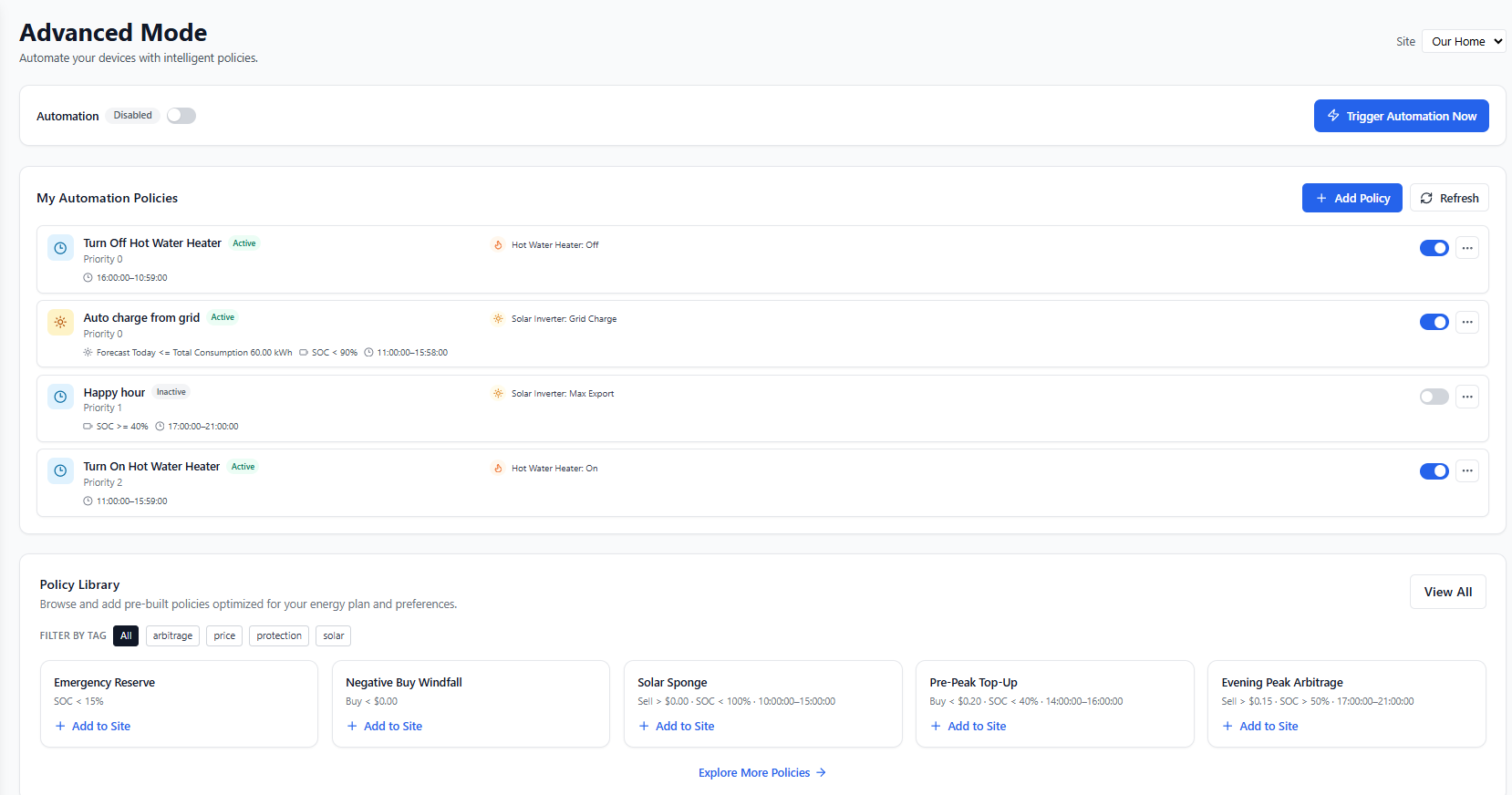
The Policy Library has ready-made rules you can add in one click. They include Solar Sponge, Pre-Peak Top-Up, Evening Peak Arbitrage and Negative Buy Windfall, for those on wholesale plans such as Amber or Local Volts.
Solar-aware EV charging that won't drain the battery
Gridkeeper matches the charger to genuine excess solar. If a cloud cuts production, it ramps the car down rather than letting it pull from the home battery. Inside a free window, it can switch to grid charging with a cap, so the EV takes its share and no more. Our ChargeHQ replacement guide explains how the energy buckets work.
Tesla is fully supported, both the Powerwall and the car. Gridkeeper adjusts charge amps in real time through Tesla's official API. OCPP chargers from Wallbox, Evnex, EVOS, Schneider, Smappee and others connect with a charge point ID and a WebSocket address.
New: Shelly
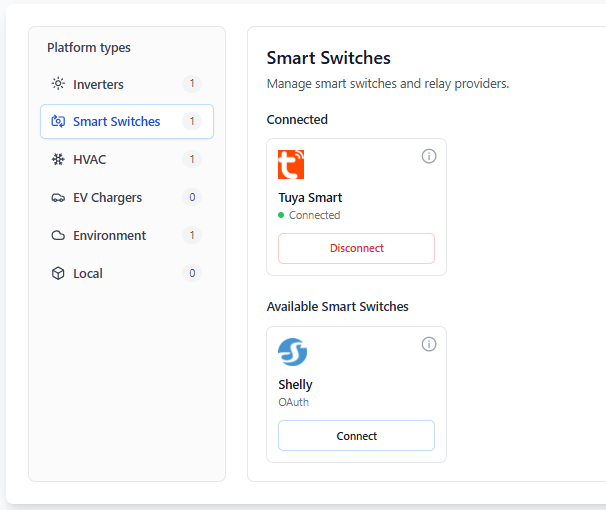
Gridkeeper now connects to Shelly relays and smart switches with a one-click OAuth sign-in. Shelly is one of the most common relays installed behind hot water systems, pool pumps and heaters in Australian homes. These loads are ideal for soaking up free or cheap midday power. Shelly sits alongside Tuya in the Smart Switches category, so you can mix brands on the same site.
One site, every brand
| Category | Supported |
|---|---|
| Inverters and batteries | Sungrow, Deye, FoxESS, Sigenergy, Smappee, Tesla Powerwall |
| EV charging | Tesla vehicles, OCPP chargers |
| Smart switches | Shelly (new), Tuya |
| Air conditioning | Sensibo |
| Forecast and prices | Solcast, Amber Electric, Local Volts |
If something you own isn't listed, tell us what's installed.
What it costs: $10, once
Gridkeeper now has a one-off $10 fee per site, charged when you connect your first device. No subscription, and no extra gateway or hardware box to buy.
For comparison, a Solar Sharer household that moves just 2 kWh of evening use into the free window saves around 80 cents a day at a 40c/kWh peak rate. That covers the $10 in under two weeks.
Tesla vehicle control has a small separate usage cost, because Tesla charges for access to its API. Most owners pay around $5 a month, depending on how often the car is woken and adjusted.
Get ready before summer
The free window is already open in NSW, South East Queensland, South Australia and Victoria. The battery rebate drops on 1 January. And every hot afternoon this summer, the evening peak will be the most expensive power you buy.
- Check your retailer's Solar Sharer or Midday Power Saver offer against your current plan.
- Connect your inverter, charger and switches in Gridkeeper.
- Add a midday policy from the Policy Library and let it run.
Prices, rebate rates and plan details were current at 9 November 2026 and may change. Check your retailer's offer before you switch. Dusk Energy does not provide financial advice.